
 www.homedepot.com ```html
 Introduction: Building a DIY Workbench with Integrated Dust Collection This project details the construction of a robust workbench featuring a built-in dust collection system. This workbench is designed to be a central hub for woodworking and other DIY projects, providing a stable work surface and minimizing dust accumulation in your workspace. This is a project for experienced DIYers and requires familiarity with power tools and woodworking techniques. Safety is paramount, always wear appropriate safety gear when working with power tools.
Materials and Tools: Before starting, gather all necessary materials and tools. This list can be adjusted based on your specific design and size requirements. Lumber (e.g., 2x4s, plywood sheets): For the frame, legs, workbench top, and dust collection enclosure. Decide on the workbench dimensions before purchasing. Dust collector: Choose a suitable dust collector with sufficient CFM (cubic feet per minute) for your needs. PVC pipe and fittings: For routing dust collection from the source (e.g., miter saw) to the dust collector. Blast gates: To control airflow to different dust collection points. Wood screws: Various sizes for different connections. Wood glue: For strong and durable joints. Sandpaper: For smoothing surfaces and edges. Finish (e.g., polyurethane, varnish): To protect the wood and provide a durable surface. Power tools: Circular saw, miter saw, drill, impact driver, jigsaw, sander. Measuring tools: Tape measure, square, level. Clamps: For holding pieces together while gluing and screwing. Safety gear: Safety glasses, ear protection, dust mask.
Step 1: Building the Workbench Frame Construct the frame of the workbench using 2x4 lumber. Cut the lumber to the desired length for the workbench's width and depth. Ensure all cuts are square. Assemble the frame using wood screws and wood glue. Use clamps to hold the pieces together while the glue dries. Add support beams to the frame for increased stability, especially if the workbench will be supporting heavy loads. Ensure the frame is square by measuring the diagonals. Adjust as needed before the glue dries completely.
Step 2: Attaching the Legs Securely attach the legs to the workbench frame. Cut the legs to the desired height, ensuring they are all the same length. Attach the legs to the corners of the frame using wood screws and wood glue. Reinforce the connection with corner brackets if desired. Consider adding adjustable feet to the legs to level the workbench on uneven surfaces. Check the stability of the legs and reinforce as needed.
Step 3: Creating the Workbench Top Construct a sturdy and durable workbench top. Cut plywood sheets to the desired size for the workbench top. Consider using multiple layers of plywood for increased thickness and strength. Glue and screw the plywood layers together, ensuring they are aligned properly. Attach the workbench top to the frame using wood screws from underneath. Optionally, add a solid wood edging to the workbench top for a more finished look and added protection.
Step 4: Designing and Building the Dust Collection Enclosure Create an enclosure to house the dust collector and route the dust collection hoses. Determine the best location for the dust collector within the workbench. Consider accessibility for maintenance and filter changes. Build an enclosure around the dust collector using plywood or other suitable material. Ensure the enclosure has proper ventilation to prevent overheating. Cut holes in the enclosure for the dust collection hoses and power cord. Consider adding a door to the enclosure for easy access to the dust collector.
Step 5: Installing the Dust Collection System Connect the dust collection hoses and blast gates to create a functional dust collection system. Route PVC pipe from the dust collector to the desired dust collection points (e.g., miter saw, router table). Install blast gates at each dust collection point to control airflow. Secure the PVC pipe to the workbench frame using pipe clamps or other suitable fasteners. Ensure all connections are airtight to maximize dust collection efficiency.
Step 6: Finishing Touches Complete the workbench with sanding, finishing, and any desired accessories. Sand all surfaces of the workbench smooth, paying particular attention to edges and corners. Apply a finish (e.g., polyurethane, varnish) to protect the wood and provide a durable surface. Follow the manufacturer's instructions for application. Consider adding accessories such as a vise, tool storage drawers, or a power strip. Test the dust collection system to ensure it is working properly.
Conclusion: Enjoy Your New Workbench Congratulations on building your own workbench with integrated dust collection! This project provides a functional and organized workspace for all your DIY endeavors. Regularly maintain your dust collection system to ensure optimal performance.
``` Craftsman Stationary Work Bench: 29-1/2" Wide, 18" Deep, 40-1/4" High, Black Red 23167927 Msc
 atelier-yuwa.ciao.jp
 Husky 4 Ft. Solid Wood Top Workbench With Storage-g4801s-us
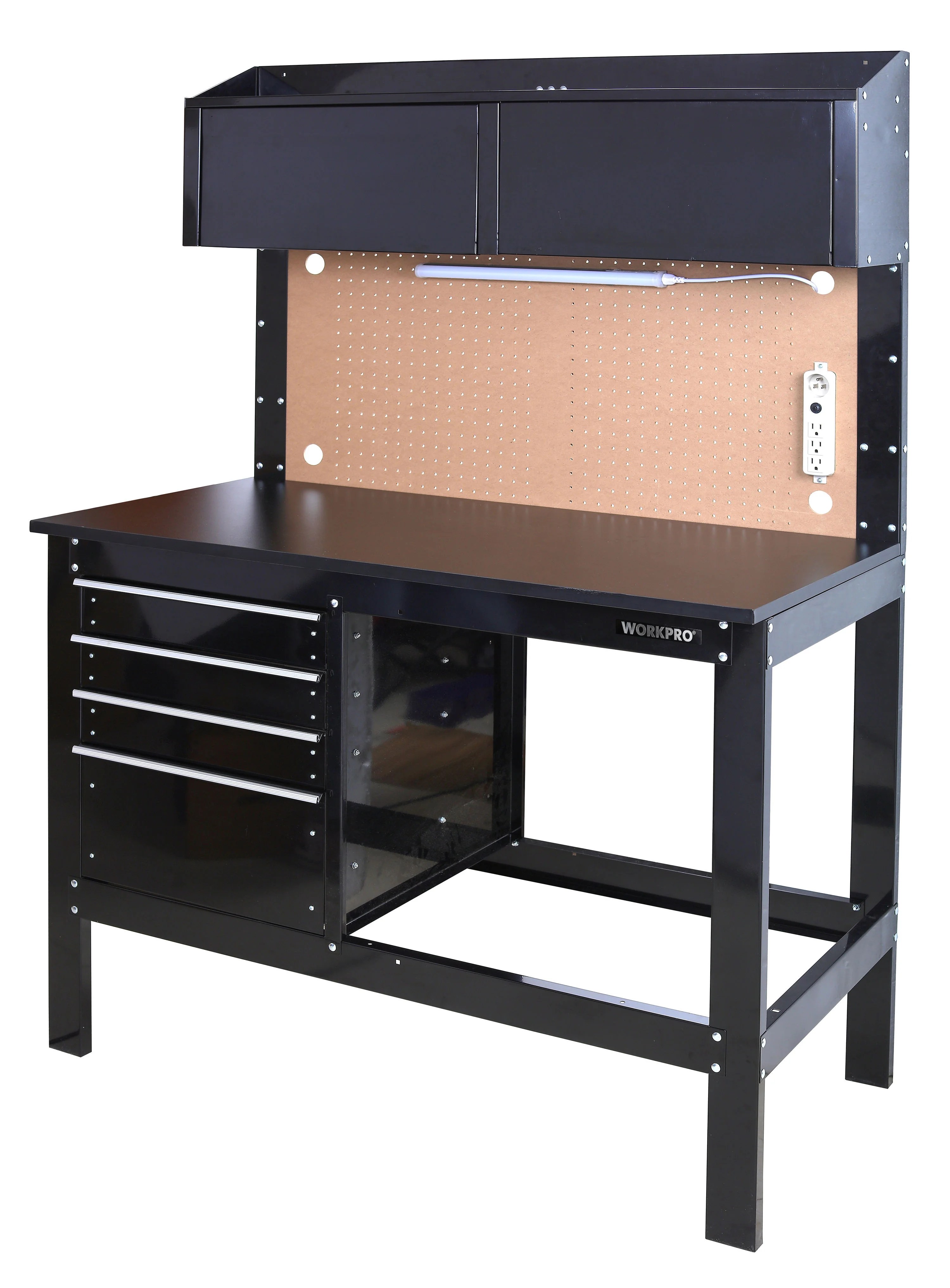
www.homedepot.com Workpro 2-in-1 48in Workbench And Cabinet Combo With Work Light
 www.walmart.com


0 komentar:
Posting Komentar
Catatan: Hanya anggota dari blog ini yang dapat mengirim komentar.