
 www.woodsmithplans.com
 Introduction: A Cleaner Workshop is a Happy Workshop Dust. Every woodworker's nemesis. This guide will walk you through building a workbench with integrated dust collection, keeping your workspace cleaner and your lungs healthier. This workbench not only provides a solid work surface but also actively sucks up dust as you create it.
Step 1: Gathering Your Materials Before you begin, assemble everything you'll need. This includes lumber (2x4s, plywood, and potentially hardwood for the work surface), dust collection fittings (4-inch port, flexible hose), a shop vacuum, screws, glue, measuring tools, saw (circular saw or table saw), drill, and safety equipment (eye protection, dust mask). The amount of lumber will depend on the size of workbench you choose. Plywood is typically used for the box structure and shelves and 2x4 for the legs and framing.
Step 2: Planning Your Workbench Dimensions Think about how you'll use the workbench. What's the ideal height for comfortable working? How much surface area do you need? Consider the dimensions of your shop vacuum and how you'll integrate it. A common size is around 6 feet long, 30 inches deep, and 36 inches high. Sketch out your plans, noting all measurements, before you start cutting any wood. This is crucial for accurate construction.
Step 3: Building the Base Frame Start by building the base frame using 2x4 lumber. Cut the pieces to the lengths specified in your plans. Assemble the frame using screws and wood glue. Ensure the frame is square and level. This frame will support the weight of the workbench and everything on it, so make sure it's sturdy. Reinforce the corners with corner braces for added stability.
Step 4: Adding the Legs Cut four 2x4s to the desired height for your workbench legs. Attach them to the inside corners of the base frame using screws and glue. Again, make sure everything is square and level. Diagonal bracing between the legs will further increase stability and prevent racking.
Step 5: Constructing the Dust Collection Box This is the heart of the project. The dust collection box will be built underneath the workbench surface. Use plywood to create an enclosed box. Incorporate a 4-inch dust collection port on one side of the box. Make sure the port is easily accessible for connecting your shop vacuum hose. Consider adding baffles inside the box to direct the airflow effectively.
Step 6: Creating the Slotted Work Surface The work surface needs slots or holes to allow dust to be drawn into the dust collection box. Use plywood or hardwood (for a more durable surface). Cut slots or drill holes across the surface. The spacing and size of these openings will affect the dust collection efficiency. Too few, and dust won't be captured; too many, and the surface may become weak.
Step 7: Assembling the Work Surface and Dust Collection Box Attach the slotted work surface to the top of the dust collection box, ensuring a tight seal to maximize suction. Screw the box assembly to the base frame. The box needs to sit flush to the frame. Use appropriate screws for attaching plywood or hardwood to the 2x4 frame.
Step 8: Integrating the Shop Vacuum Connect your shop vacuum to the 4-inch dust collection port on the side of the box using a flexible hose. Secure the hose to prevent leaks. Position the shop vacuum so that it is accessible but out of the way. You might consider building a small enclosure for the shop vacuum to reduce noise.
Step 9: Adding Shelves and Other Features Consider adding shelves underneath the workbench for storing tools and materials. You can also add drawers, vises, or other features to customize your workbench to your specific needs. Plywood is suitable for shelves. Drawers can be made from plywood or solid wood.
Step 10: Finishing Touches Sand all surfaces of the workbench to remove any sharp edges or splinters. Apply a finish to protect the wood and make it easier to clean. Consider using a polyurethane finish for durability. Test the dust collection system and make any necessary adjustments. Seal any gaps to prevent dust from escaping.
Conclusion: A Cleaner, Healthier Workspace Congratulations! You've built a workbench with integrated dust collection. You now have a solid, functional work surface that helps keep your shop cleaner and protects your health. This project improves your woodworking environment, allowing for greater focus and creativity. Enjoy your new, cleaner workshop!
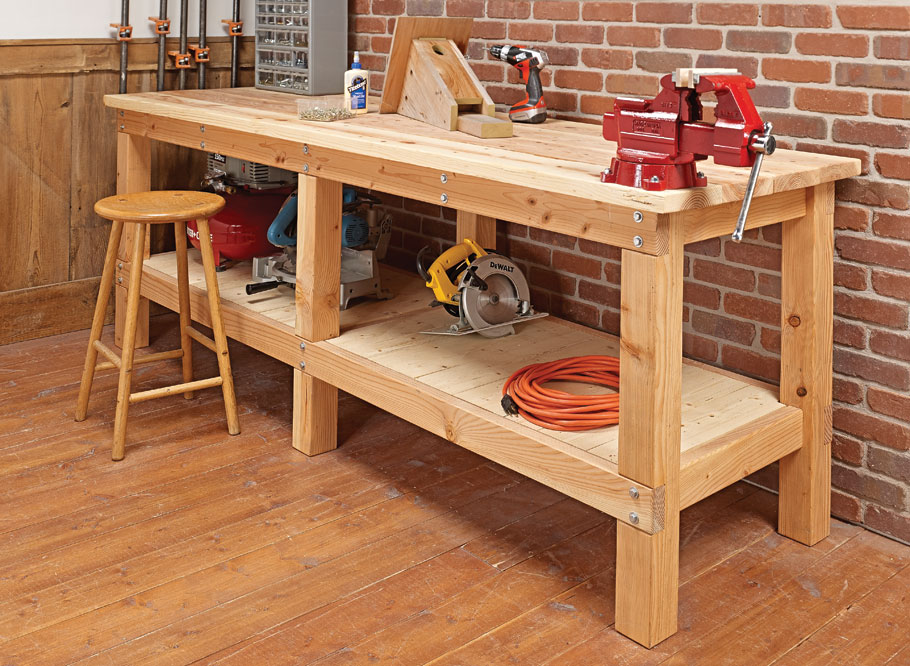
Heavy-duty Plank Workbench
www.woodsmithplans.com Craftsman Stationary Work Bench: 29-1/2" Wide, 18" Deep, 40-1/4" High, Black Red 23167927 Msc
 atelier-yuwa.ciao.jp
 14 Super-simple Workbenches You Can Build — The Family Handyman
 www.familyhandyman.com


0 komentar:
Posting Komentar
Catatan: Hanya anggota dari blog ini yang dapat mengirim komentar.